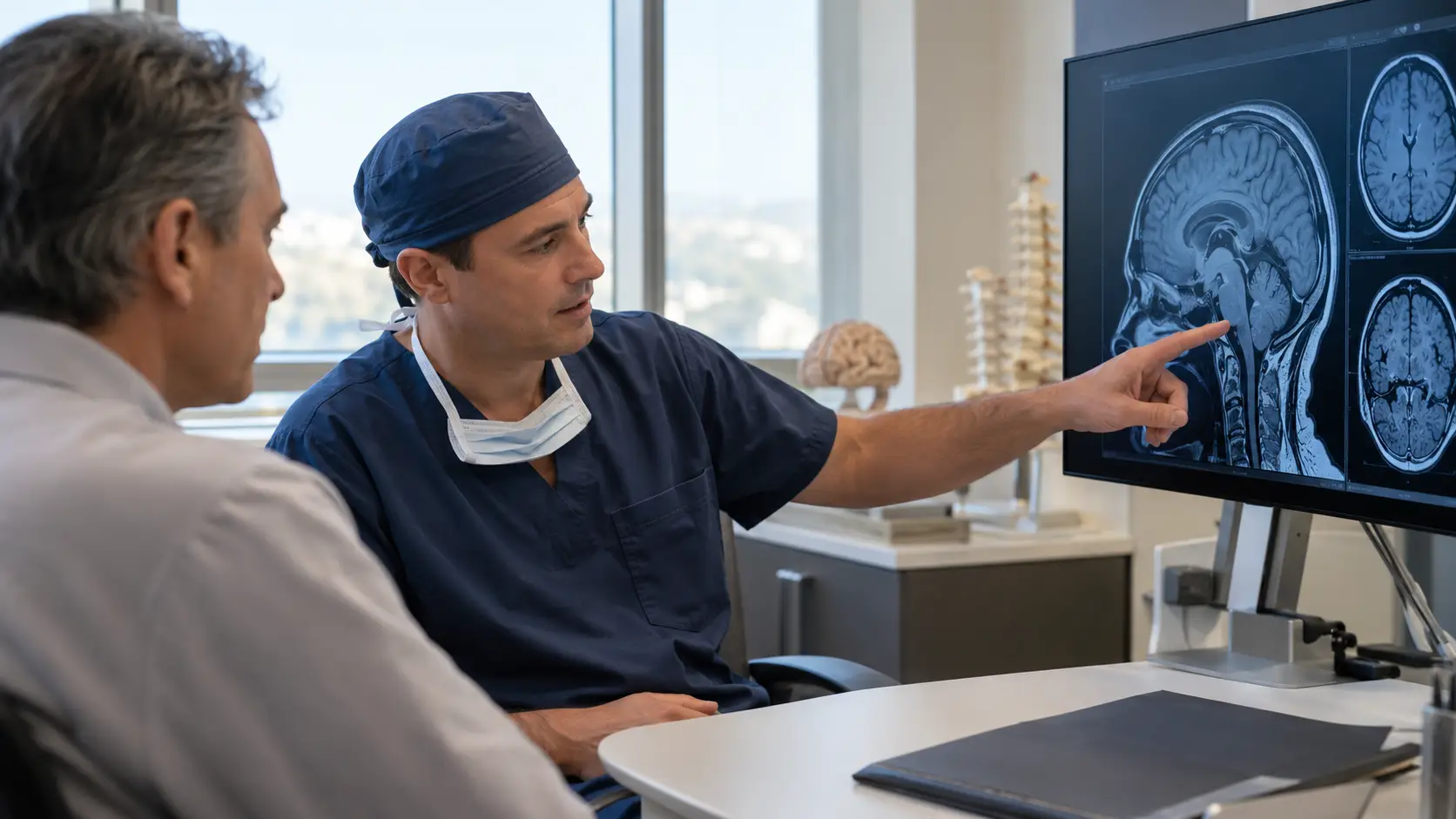
A brain tumor diagnosis brings a stack of urgent decisions: which surgical team has handled tumors like this one, whether radiation or a newer therapy makes more sense than surgery, and how a family pays for months of imaging, hospitalization, and follow-up care.
This guide covers ten hospitals that consistently rank near the top nationally for neurology and neurosurgery, the treatment technologies that separate specialized centers from general hospitals, and what brain tumor care typically costs — including how insurance and Medicare apply at each stage.
This isn’t a substitute for a conversation with an oncologist or neurosurgeon. It’s a starting point before those calls.
How These Hospitals Were Selected
The list below comes primarily from the U.S. News & World Report 2025–2026 rankings for Neurology & Neurosurgery. MD Anderson Cancer Center and Memorial Sloan Kettering are also internationally recognized for neuro-oncology specifically, but they’re typically ranked under separate cancer-care categories rather than this one, so they aren’t numbered here.
Quick Comparison
| Hospital | Location | Key Specialty | Notable Strength |
|---|---|---|---|
| NYU Langone Hospitals | New York, NY | Complex tumors, neurofibromatosis | Ranked #1 for Neurology & Neurosurgery |
| UCSF Medical Center | San Francisco, CA | Awake brain mapping | Pioneer in intraoperative brain mapping |
| NewYork-Presbyterian | New York, NY | Cerebrovascular & complex tumors | Combined neurosurgical and vascular expertise |
| Mayo Clinic | Rochester, MN | Gliomas & meningiomas | Deep neuro-oncology research bench |
| Rush University Medical Center | Chicago, IL | Robotic & spinal tumors | Minimally invasive robotic tumor removal |
| Northwestern Memorial | Chicago, IL | Multidisciplinary tumor care | Dedicated Malnati Brain Tumor Institute |
| Johns Hopkins Hospital | Baltimore, MD | Awake craniotomy | Early developer of awake craniotomy protocols |
| Penn Presbyterian | Philadelphia, PA | Glioblastoma trials | Active precision-medicine trial pipeline |
| UT Southwestern | Dallas, TX | Neuro-oncology research | O’Donnell Brain Institute research infrastructure |
| Massachusetts General | Boston, MA | Proton therapy | Pappas Center pairs neuro-oncology with proton beam access |
The Top 10 Hospitals for Brain Tumor Treatment
1. NYU Langone Hospitals — New York, NY
NYU Langone holds the top spot in the U.S. News Neurology & Neurosurgery rankings for 2025–2026. Its team, which includes Dr. John Golfinos, has particular depth in neurofibromatosis and complex tumor cases that some centers decline to operate on — experience that matters most for unusually shaped or deeply seated tumors.
2. UCSF Medical Center — San Francisco, CA
Dr. Edward Chang’s team uses advanced brain mapping during surgery to identify which areas control speech, movement, or memory before removing nearby tissue. For tumors sitting close to functional brain regions, preserving those functions can matter as much as removing the tumor itself.
3. NewYork-Presbyterian — New York, NY
Dr. J Mocco’s team pairs neurosurgical tumor expertise with a strong cerebrovascular program, useful for tumors involving major blood vessels — a combined skill set not every hospital offers under one roof.
4. Mayo Clinic — Rochester, MN
Mayo runs one of the country’s most active neuro-oncology research programs, with physicians like Dr. Gelareh Zadeh focused specifically on gliomas and meningiomas. Its integrated model puts neurosurgery, oncology, and radiation therapy under coordinated care rather than requiring referrals between separate practices.
5. Rush University Medical Center — Chicago, IL
Rush has built its reputation around robotic and minimally invasive approaches to brain and spinal tumors, with Dr. John O’Toole’s team leading that work. Smaller incisions generally mean shorter hospital stays, though eligibility depends entirely on the tumor’s size and location.
6. Northwestern Memorial Hospital — Chicago, IL
Northwestern’s Lou and Jean Malnati Brain Tumor Institute puts neurosurgeons, oncologists, radiation specialists, and neuropsychologists on one team instead of handing patients between departments — a structure that matters most for tumors requiring combination treatment.
7. Johns Hopkins Hospital — Baltimore, MD
Hopkins was among the earlier academic centers to develop awake craniotomy protocols, now used at several hospitals on this list. Its neurosurgery program also has long-standing experience with acoustic neuroma, a tumor type growing near the nerves controlling hearing and balance.
8. Penn Presbyterian Medical Center — Philadelphia, PA
Penn’s active glioblastoma clinical trial pipeline includes precision-medicine approaches tailored to a tumor’s genetic profile. For patients whose tumors haven’t responded to standard chemotherapy and radiation, trial access can be a real factor in seeking a second opinion here.
9. UT Southwestern Medical Center — Dallas, TX
The O’Donnell Brain Institute combines research infrastructure with clinical care, giving patients in the Dallas area access to trials and treatment approaches that typically cluster around coastal academic centers.
10. Massachusetts General Hospital — Boston, MA
Mass General’s Pappas Center for Neuro-Oncology is one of relatively few U.S. centers offering proton-beam therapy alongside comprehensive neuro-oncology care — relevant for tumors near sensitive structures where standard radiation risks more damage to healthy tissue.
Advanced Treatments Worth Understanding
Awake craniotomy keeps a patient lightly sedated but responsive during surgery, letting the team test speech and motor function in real time near sensitive brain tissue.
Stereotactic radiosurgery (Gamma Knife or CyberKnife) delivers precisely targeted radiation to tumors that can’t be safely operated on, or to tissue left behind after surgery.
Proton-beam therapy stops its radiation dose at a calculated depth rather than passing through the tumor into healthy tissue beyond it.
Fluorescence-guided surgery (5-ALA, or Gleolan) has patients drink a compound before surgery that makes tumor cells glow under a specialized microscope, helping surgeons distinguish cancerous from healthy tissue at a microscopic level.
Laser interstitial thermal therapy (LITT) treats tumors considered too deep or risky for open surgery. Surgeons thread a laser catheter through a small opening and heat the tumor from within, monitored by real-time MRI.
Personalized tumor vaccines, still largely experimental at centers including Penn Medicine and Johns Hopkins, use a patient’s own tumor tissue in an attempt to train their immune system against remaining cancer cells. This is not yet standard care.
What Brain Tumor Treatment Actually Costs
Brain tumor treatment is rarely one bill — it’s a sequence of costs across surgery, imaging, hospitalization, and often months of follow-up therapy, totaling anywhere from roughly $50,000 to over $700,000 depending on tumor type and treatment path.
| Service | Estimated Cost Range (Before Insurance) |
|---|---|
| Brain MRI with contrast | $700 – $1,100 |
| Craniotomy (surgical tumor removal) | $50,000 – $160,000 |
| Neuro-ICU stay | $8,000 – $12,000 per night |
| Stereotactic radiosurgery | $12,000 – $125,000 |
| Proton-beam therapy | $75,000 – $175,000 |
| Oral chemotherapy (temozolomide), per cycle | $4,000 – $8,000 |
| Tumor Treating Fields device (Optune) | Roughly $20,000–$27,000 per month |
These are general estimates that shift based on tumor complexity, surgery length, hospital location, and ICU recovery time. An itemized estimate from the treating hospital’s billing office is the only reliable way to know actual out-of-pocket exposure.
Insurance Considerations
Commercial insurance and Medicare generally cover the bulk of in-network treatment, but coinsurance on high-cost procedures (often 10% to 50%) means many patients hit their annual out-of-pocket maximum almost immediately after surgery.
- Prior authorization is often required, and sometimes initially denied, for proton-beam therapy or the Optune device. Hospitals with established neuro-oncology programs typically have staff experienced in filing peer-to-peer appeals.
- Single-case agreements can let a patient access an out-of-network hospital, such as UCSF or Mayo Clinic, at in-network rates when a specific specialized service isn’t available locally — negotiated by the hospital’s financial team, not the patient.
- Medicare splits coverage by setting: Part A typically covers inpatient craniotomy, Part B covers outpatient radiation, and Part D covers oral chemotherapy like temozolomide, which can leave patients facing significant costs in the coverage gap.
- Uninsured or cash-pay patients may be offered discounts, commonly 30% to 35%, at many major medical centers — worth asking about directly with financial counseling.
- Financial assistance is available through the National Brain Tumor Society and the Brain Tumor Foundation, and most top-ranked hospitals employ financial navigators to help patients apply for institutional aid.
What to Consider Before Choosing a Hospital
- Tumor type and location. Some centers specialize in specific tumor types (gliomas, meningiomas, acoustic neuromas) or hard-to-reach locations.
- Access to advanced technology. Not every hospital offers proton therapy, LITT, or fluorescence-guided surgery.
- Clinical trial availability. For aggressive or recurrent tumors, trial access at academic centers can open paths unavailable elsewhere.
- Insurance network status. Confirm network status before scheduling, and ask about single-case agreements if it isn’t in-network.
- Distance and logistics. Radiation and chemotherapy often require repeated visits over weeks.
- Multidisciplinary coordination. An integrated tumor board can streamline care that would otherwise require separate referrals.
Frequently Asked Questions
How much does brain tumor treatment cost in the U.S.? Total costs range from roughly $50,000 to over $700,000 depending on tumor type and treatment path. A personalized estimate from the treating hospital is the most reliable figure.
Does insurance cover brain tumor surgery? Most commercial insurance and Medicare cover in-network surgery, though coinsurance can still mean substantial out-of-pocket costs, and advanced treatments often require prior authorization.
What is awake craniotomy, and is it painful? It allows surgeons to test brain function during tumor removal near sensitive areas. The brain has no pain receptors, and patients receive sedation plus local anesthesia at the incision site.
Can I get treated at a top-ranked hospital if it’s out of my insurance network? Sometimes, through a single-case agreement between the hospital and insurer, typically when a specific specialized service isn’t available in-network.
What questions should I ask a neurosurgeon before treatment? Their experience with your specific tumor type, available treatment options including trials, expected recovery time, and how the hospital’s financial counseling team can help with insurance approvals.
Sources
- U.S. News & World Report, Best Hospitals for Neurology & Neurosurgery, 2025–2026 rankings
- Centers for Medicare & Medicaid Services (Medicare Part A, B, and D coverage guidelines)
- National Brain Tumor Society
- Brain Tumor Foundation
Medical Disclaimer
This article is for general informational and educational purposes only and is not medical advice. Hospital rankings, programs, and specialist affiliations can change, and costs and insurance coverage vary by plan, provider, and location. Verify current details with hospitals, insurers, and qualified healthcare professionals before making treatment decisions. If you are experiencing a medical emergency, seek immediate professional medical attention.
1 thought on “10 Best Hospitals for Brain Tumor Treatment in the USA: Cost, Insurance, Specialists & Treatment Options”