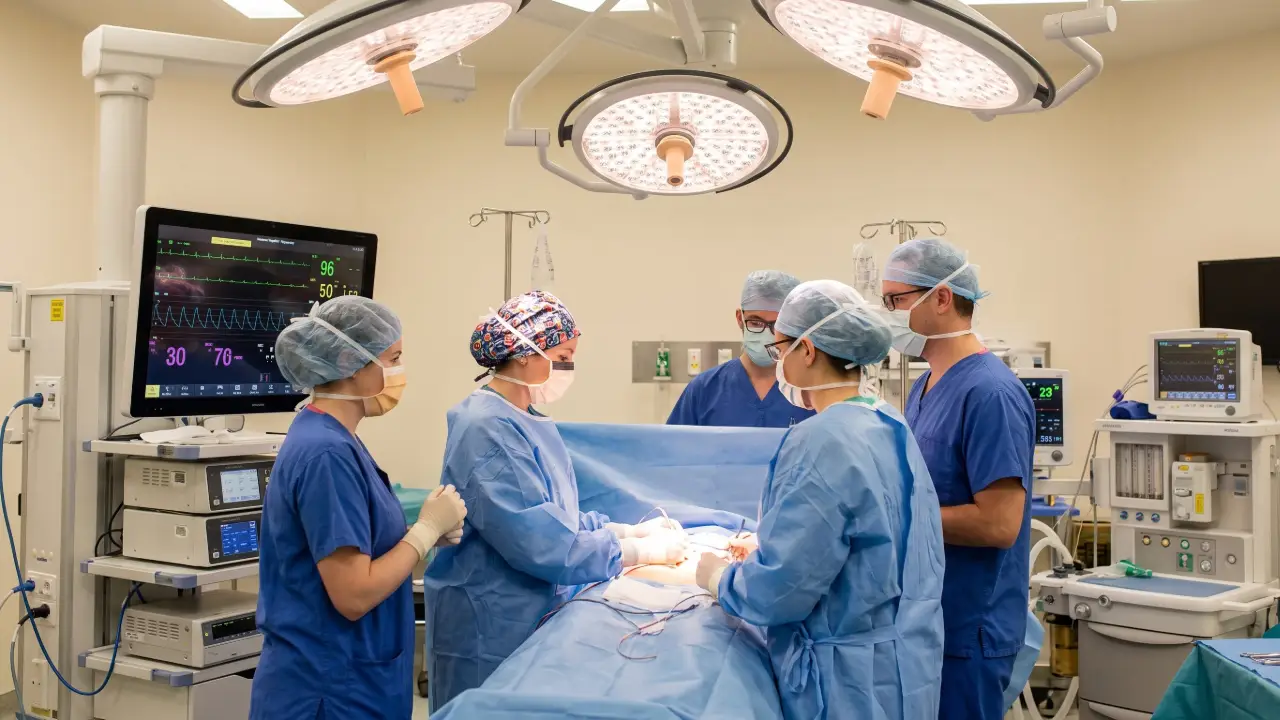
A coronary artery bypass graft, usually shortened to CABG or “bypass surgery,” is one of the most common major operations performed in the United States. It’s also one of the most consequential: the surgeon reroutes blood flow around blocked or narrowed coronary arteries, typically using a healthy vessel from the chest, leg, or arm, so the heart muscle gets the oxygen it needs.
Because this is open-heart surgery with a real recovery curve, where you have it done matters. Hospital volume, the specific expertise of the surgical team, and the quality of post-operative and rehab care vary more than most patients expect.
This guide covers 10 U.S. hospitals with strong, independently recognized cardiac surgery programs, what CABG typically involves, what it tends to cost, how insurance and Medicare usually apply, and questions worth asking before committing to a surgical team.
Quick Comparison
| Hospital | Location | 2026 U.S. News Rank | Known For |
|---|---|---|---|
| NYU Langone Hospitals | New York, NY | No. 1 | Complex valve and coronary surgery, minimally invasive techniques |
| NewYork-Presbyterian (Columbia and Cornell) | New York, NY | No. 2 | High-risk case volume, research-driven cardiac care |
| Mayo Clinic | Rochester, MN | No. 3 | Multidisciplinary heart team, robotic-assisted surgery |
| Cedars-Sinai Medical Center | Los Angeles, CA | No. 4 | Smidt Heart Institute, heart transplant and bypass expertise |
| Mount Sinai Hospital | New York, NY | No. 5 | Complex and high-risk cardiac cases |
| Massachusetts General Hospital | Boston, MA | No. 6 | Academic cardiac research, Harvard-affiliated care |
| Northwestern Memorial Hospital | Chicago, IL | No. 7 | Bluhm Cardiovascular Institute, advanced surgical volume |
| Cleveland Clinic | Cleveland, OH | No. 8 | Decades of cardiac surgery volume and outcomes data |
| Stanford Health Care | Stanford, CA | No. 9 | Robotic and minimally invasive cardiac surgery |
| Houston Methodist Hospital | Houston, TX | No. 10 | DeBakey Heart & Vascular Center, high surgical volume |
How We Selected These Hospitals
This list draws primarily on U.S. News & World Report’s 2026 Best Hospitals rankings for cardiology, heart, and vascular surgery, published in August 2026. That report evaluated data from roughly 4,500 hospitals nationwide, weighing more than 40 risk-adjusted patient outcome measures alongside hospital structure, patient experience, and expert opinion from physicians in the field. We also reviewed publicly available information about each hospital’s cardiac surgery programs and facilities.
This isn’t a clinical endorsement or a guarantee of outcomes for any individual patient. It’s a starting point for understanding which programs have earned recognition, and why, before you do your own research and talk with your care team.
1. NYU Langone Hospitals
New York, NY
NYU Langone holds the No. 1 spot nationally for cardiology, heart, and vascular surgery in the 2026 U.S. News rankings, its second consecutive year at the top. The adult cardiac surgery division includes surgeons with decades of combined experience in coronary bypass, valve repair, and minimally invasive techniques, including Dr. Aubrey Galloway, chair of the Department of Cardiothoracic Surgery, whose practice areas include coronary artery bypass and aortic surgery. NYU Langone spans multiple campuses across Manhattan, Brooklyn, and Long Island, so it’s worth confirming which location and surgical team you’d actually work with.
2. NewYork-Presbyterian Hospital, Columbia and Cornell
New York, NY
Ranked No. 2 nationally, NewYork-Presbyterian is affiliated with both Columbia University and Weill Cornell Medicine, giving its cardiac surgery program two academic medical schools’ worth of research and training behind it. The hospital is frequently noted for handling complex, high-acuity cases, including patients turned away elsewhere. It also operates across two distinct campuses, so patients should clarify which one and which surgical team they’d be scheduled with.
3. Mayo Clinic
Rochester, MN
Mayo Clinic’s cardiovascular surgery department is built around a “heart team” model, where cardiologists, surgeons, and other specialists jointly evaluate complex cases before recommending a treatment path. Surgeons there, including Dr. Arman Arghami, perform both traditional and robotic-assisted coronary bypass procedures. The Rochester campus draws patients from across the country and internationally, which can mean longer planning lead times but also access to a high volume of complex cardiac cases.
4. Cedars-Sinai Medical Center
Los Angeles, CA
Cedars-Sinai’s Smidt Heart Institute is a prominent West Coast cardiac program, with a particular reputation in heart transplantation alongside bypass and valve surgery. Its ranking has held steady in recent U.S. News cycles, and for patients who want strong cardiac surgery without traveling to the East Coast or Midwest, it’s often the first name that comes up.
5. Mount Sinai Hospital
New York, NY
Mount Sinai’s cardiac surgery program has built a reputation for taking on technically difficult cases, including reoperations and patients with multiple prior cardiac procedures. It ranked No. 5 nationally in the 2026 U.S. News list.
6. Massachusetts General Hospital
Boston, MA
Mass General’s cardiac surgery program benefits from its affiliation with Harvard Medical School and a long track record in cardiovascular research, landing at No. 6 in the 2026 rankings. Patients drawn to Mass General often cite that research pipeline, which can mean earlier access to newer surgical techniques or clinical trials for certain heart conditions.
7. Northwestern Memorial Hospital
Chicago, IL
Northwestern’s Bluhm Cardiovascular Institute is one of the higher-volume cardiac surgery programs in the Midwest, and the hospital moved into the national top 10 in the 2026 rankings. It’s a practical option for patients in the central U.S. who want a nationally ranked program without traveling to a coast.
8. Cleveland Clinic
Cleveland, OH
For decades, Cleveland Clinic held the No. 1 spot in this specialty, a streak that ended in the 2025 rankings and shifted further in 2026, when it landed at No. 8. It remains one of the highest-volume cardiac surgery centers in the country, with an extensive published outcomes record that many surgeons and researchers still reference. A lower rank doesn’t signal reduced quality; it reflects a more competitive field and heavier weighting toward regional outcome comparisons in the current U.S. News methodology.
9. Stanford Health Care
Stanford, CA
Stanford’s cardiac surgery program is known for early adoption of robotic and minimally invasive techniques, which can shorten recovery for eligible patients. It has held a national ranking for years and continues to draw patients seeking newer surgical approaches to bypass and valve procedures.
10. Houston Methodist Hospital
Houston, TX
Houston Methodist’s DeBakey Heart & Vascular Center, named for pioneering heart surgeon Dr. Michael DeBakey, handles a substantial volume of bypass and other cardiac surgeries each year. It’s the highest-ranked cardiac program in Texas and a strong option for patients in the South who want nationally recognized care closer to home.
What Heart Bypass Surgery Involves
CABG is performed under general anesthesia and can take three to six hours, depending on how many arteries need bypassing. Most patients spend the first day or two in a cardiac intensive care unit before moving to a step-down unit, with a total hospital stay of five to eight days.
Some hospitals on this list, including Mayo Clinic and Stanford, offer off-pump (beating-heart) or robotic-assisted approaches for eligible patients, which may reduce trauma to the chest and shorten recovery. These techniques aren’t right for everyone; a surgeon typically decides based on the number and location of blockages and the patient’s overall health.
Recovery is measured in months, not weeks. The breastbone generally takes six to eight weeks to heal, during which patients avoid heavy lifting and driving. Cardiac rehabilitation, a supervised program of exercise and education, usually begins around six weeks after surgery and often continues for 12 weeks or more.
What Heart Bypass Surgery Costs
Published estimates for CABG in the U.S. vary widely, generally ranging from around $70,000 to over $200,000 in total billed charges, depending on the hospital, the number of grafts needed, complications, and length of stay. That figure typically covers the operating room, anesthesia, surgeon’s fees, and hospital stay, but not everything a patient ultimately pays.
For Medicare beneficiaries in 2026:
| Medicare Part | What It Covers | 2026 Patient Responsibility |
|---|---|---|
| Part A (hospital insurance) | Inpatient hospital stay | $1,736 deductible per benefit period |
| Part B (medical insurance) | Surgeon, anesthesiologist, outpatient care | $283 annual deductible, then 20% coinsurance |
| Part B (cardiac rehab) | Up to 36 supervised outpatient sessions | 20% coinsurance after deductible |
These figures come from CMS’s 2026 premium and deductible announcement and apply to Original Medicare. Medicare Advantage plans can structure costs differently, so it’s worth confirming directly with your plan.
For patients with private insurance, the bigger factor is often the annual out-of-pocket maximum rather than the sticker price, since a medically necessary procedure like CABG typically counts toward that cap. Out-of-network surgeons or anesthesiologists, even at an in-network hospital, remain a common source of surprise bills, so confirm network status for every provider involved, not just the hospital.
Ongoing costs after discharge, including medications like blood thinners, beta-blockers, and statins, along with any outpatient physical therapy, can add $40 to several hundred dollars a month depending on coverage and network status.
What to Consider When Choosing a Hospital
A national ranking is a reasonable starting point, not the whole picture. Readers evaluating hospitals for bypass surgery may want to weigh:
- Surgical volume. Surgeons who perform CABG frequently, generally more than 100 times a year, tend to have lower complication rates, though this varies by individual and hospital.
- Published outcomes. Many top programs publish their own 30-day mortality and infection rates, which can offer more specific information than a general ranking.
- Surgical approach. Not every hospital offers off-pump or robotic-assisted bypass, and not every patient qualifies for these techniques regardless of where they’re treated.
- Network status. Confirm that the hospital, surgeon, and anesthesiologist are all in-network with your specific plan before surgery.
- Rehabilitation access. Where and how you’ll do cardiac rehab afterward matters as much for long-term outcomes as the surgery itself.
Before scheduling, it’s worth asking directly: how many bypass surgeries does this surgeon and hospital perform each year, am I a candidate for off-pump or minimally invasive surgery, and who else will be involved in my care, are they in-network?
Frequently Asked Questions
How much does heart bypass surgery cost in the U.S.?
Total billed costs commonly range from about $70,000 to over $200,000, depending on the hospital, complexity, and length of stay. Actual out-of-pocket costs depend heavily on your insurance coverage and network status.
Does Medicare cover heart bypass surgery?
Yes. Part A generally covers the inpatient hospital stay after the annual deductible, and Part B covers surgeon and outpatient costs after its own deductible, with 20% coinsurance. Medicare Advantage plans may structure costs differently.
How do I choose a hospital for bypass surgery?
Weigh the hospital’s and surgeon’s case volume, published outcomes data, whether minimally invasive options are available, and your insurance network. A second opinion is a normal part of this process for a procedure this significant.
How long is recovery after bypass surgery?
Hospital stays typically run five to eight days. The breastbone takes about six to eight weeks to heal, and many patients continue cardiac rehab for 12 weeks or longer after that.
Is minimally invasive or robotic bypass surgery available everywhere?
No. It depends on the hospital’s capabilities and whether a patient’s specific case is a good fit. Ask your surgeon directly whether you’re a candidate.
Sources
- U.S. News & World Report, 2026 Best Hospitals for Cardiology, Heart & Vascular Surgery (published August 2026)
- Centers for Medicare & Medicaid Services, 2026 Medicare Parts A and B Premiums and Deductibles (announced November 2025)
- NYU Langone Health, Department of Cardiothoracic Surgery faculty pages
- Mayo Clinic, physician biography pages, Department of Cardiovascular Surgery
Medical Disclaimer
This article is for general informational and educational purposes only and does not constitute medical advice. Hospital rankings, surgical programs, and physician affiliations can change, and readers should verify current details directly with any hospital or provider before making care decisions. Costs and insurance coverage vary by individual plan, provider, and circumstance. Consult a qualified healthcare professional about your specific condition and treatment options, and seek immediate medical attention for any emergency.
1 thought on “10 Best Hospitals for Heart Bypass Surgery in the USA: Cost, Insurance, Surgeons & Recovery”